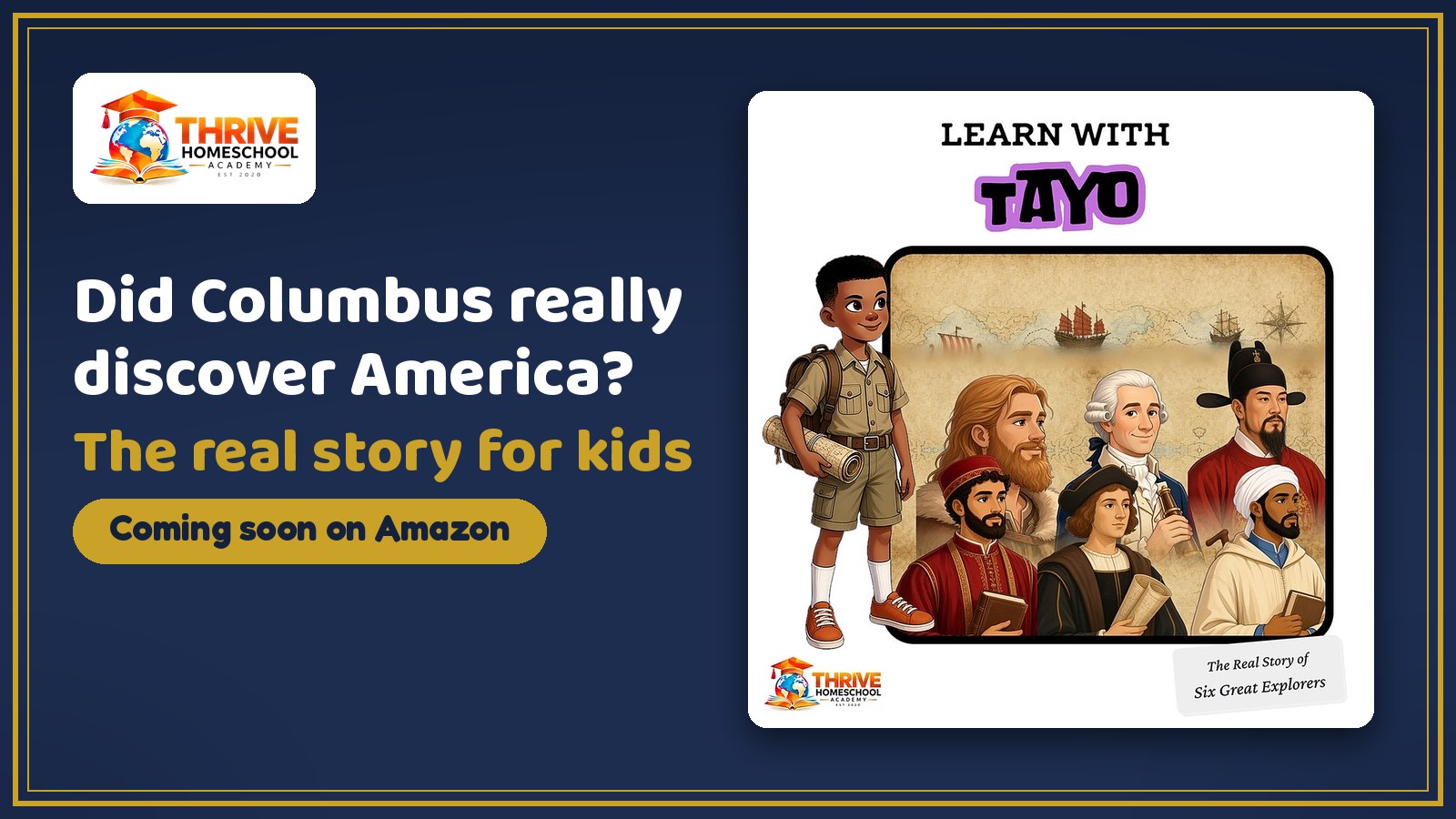
Did Columbus Really Discover America? The Real Story for Kids
It is one of the most famous sentences in history books: “In 1492, Columbus discovered America.” Many of us learned it at school. But is it true? In our new book, Learn with Tayo: The Real Story of Six Great Explorers, Tayo asks that question, and the answer surprises a lot of children (and grown-ups too).
Did Columbus discover America?
The answer is no. You cannot discover a place where millions of people already live.
Indigenous peoples had lived throughout the Americas for thousands of years before Columbus arrived. They had built towns and cities, grown food, created art, developed governments, and traded across great distances.
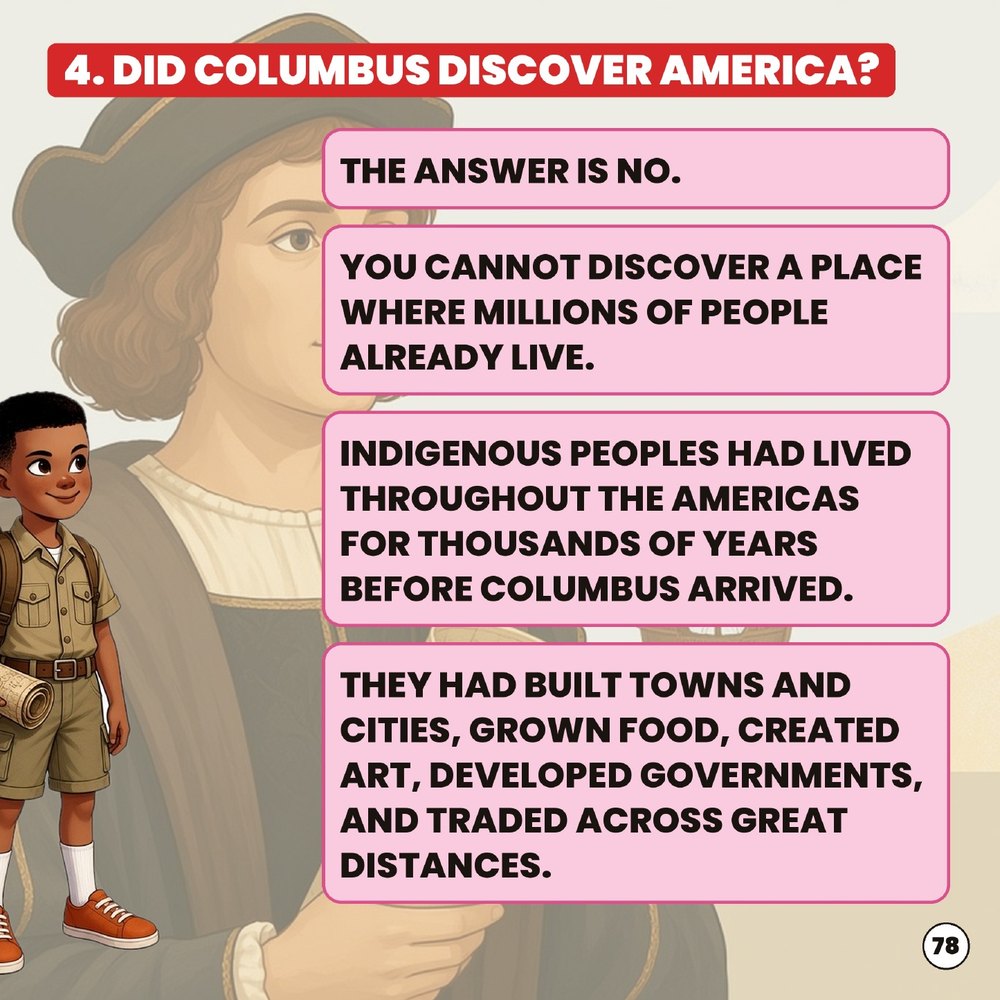
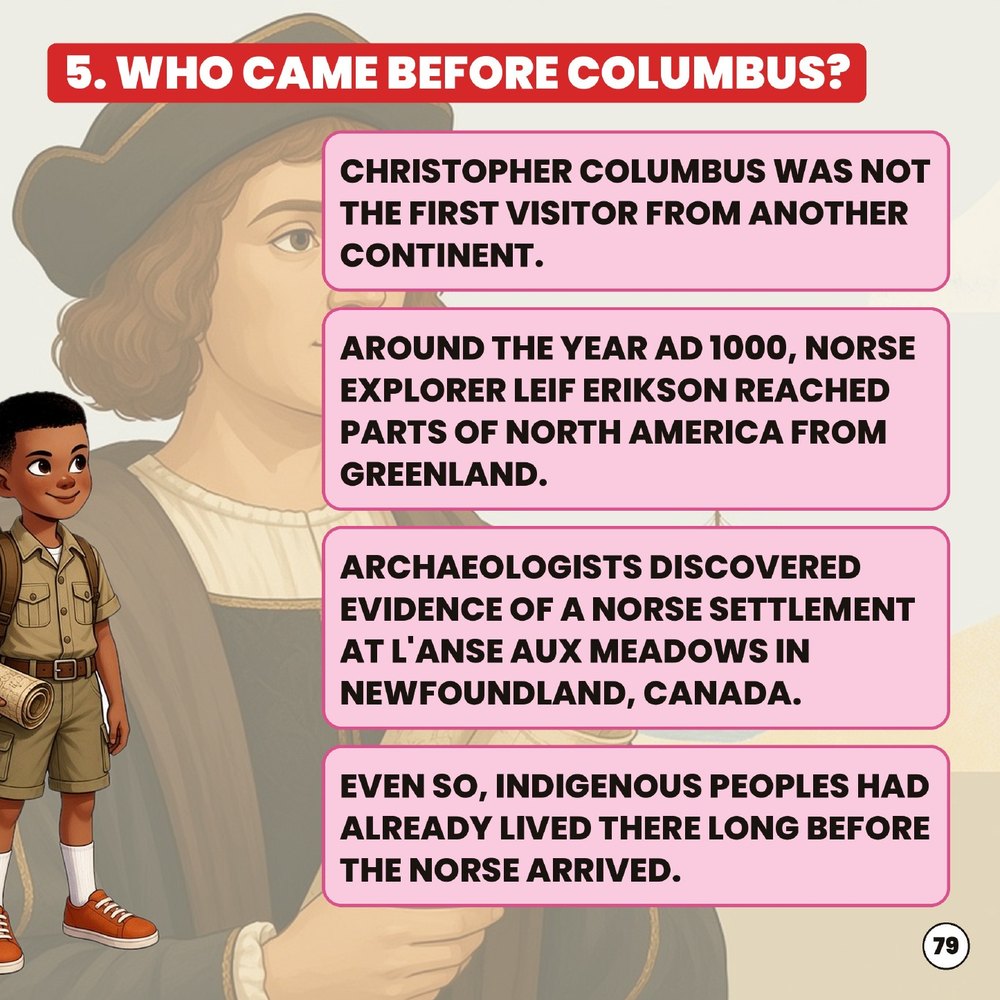
Pages 78 and 79 from Learn with Tayo: The Real Story of Six Great Explorers
So what did Columbus actually do?
Christopher Columbus was born in Genoa, Italy, around 1451. He hoped to find a faster trade route to Asia by sailing west across the Atlantic Ocean. King Ferdinand and Queen Isabella of Spain agreed to pay for his voyage, and in 1492 he set sail with three ships: the Niña, the Pinta and the Santa Maria.
After many weeks at sea, he reached islands in the Caribbean. Historians believe he first landed somewhere in the Bahamas, home to the Lucayan Taíno people. He then travelled to Cuba and Hispaniola (now Haiti and the Dominican Republic). Columbus believed he had reached islands near Asia. He had actually arrived in lands where people had lived for thousands of years, but which Europeans knew very little about.
Who came before Columbus?
Christopher Columbus was not the first visitor from another continent. Around the year AD 1000, almost 500 years earlier, the Norse explorer Leif Erikson reached parts of North America from Greenland. Archaeologists discovered evidence of a Norse settlement at L’Anse aux Meadows in Newfoundland, Canada.
Even so, Indigenous peoples had already lived there long before the Norse arrived.
Why is Columbus still famous?
Columbus’s voyages changed history. They led to lasting contact between Europe and the Americas. New plants, animals, foods, ideas and diseases crossed the Atlantic in both directions. This is often called the Columbian Exchange.
These changes affected millions of people around the world. Some changes were helpful, while others caused great suffering, especially for Indigenous communities. History includes both achievements and difficult truths, and children can understand both.
Did you know?
- Columbus made four voyages across the Atlantic Ocean.
- He never realised he had reached lands unknown to Europeans.
- Potatoes, tomatoes and maize were first grown in the Americas.
- Chocolate was first made in the Americas.
- Indigenous peoples spoke hundreds of different languages before Europeans arrived.
- Great Indigenous civilisations such as the Maya, the Aztecs and the Inca had large cities, advanced farming, art, science and complex governments.
Think like a historian at home
This is a lovely topic for home education, because there is no need to simply memorise a date. Instead, ask your child the questions historians ask:
- Who wrote this story?
- What evidence do we have?
- Are there different points of view?
- What can archaeology tell us?
- What can Indigenous histories teach us?
Good historians keep learning as new evidence is discovered, and so can our children.
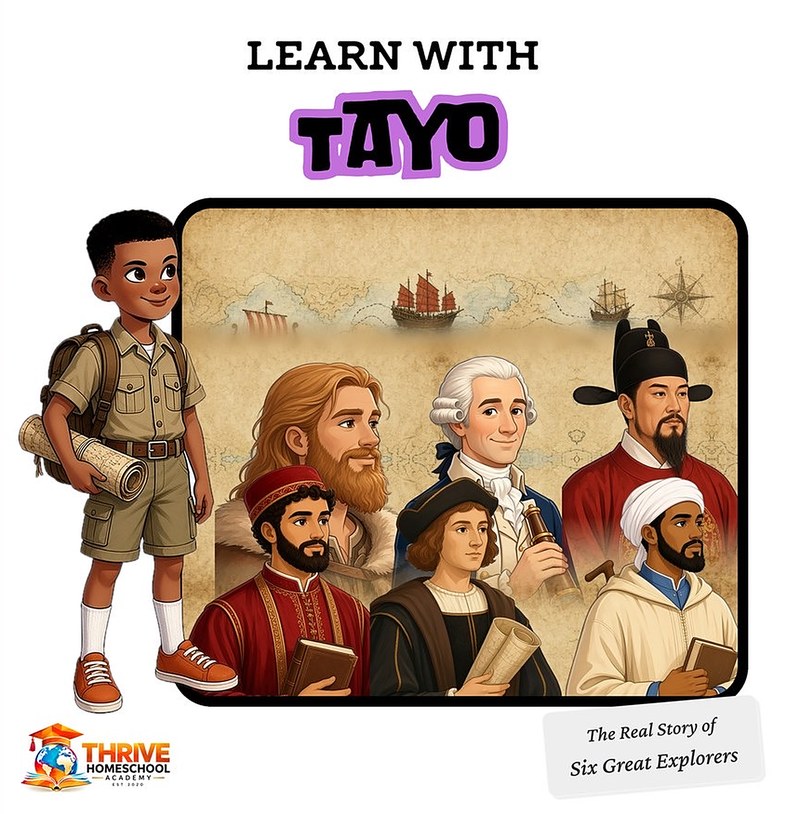
Learn with Tayo: The Real Story of Six Great Explorers
Meet Leif Erikson, Marco Polo, Ibn Battuta, Zheng He, Christopher Columbus and James Cook. 110 full-colour pages with maps, timelines, puzzles, quizzes and colouring, for ages 7–12.
Buy the paperback on Amazon → Open the Explorers app →The paperback is out now on Amazon. You can also explore all six explorers in the Learn with Tayo Explorers app, then see all our books on the Thrive Books page.
Thrive Homeschool Academy: fun learning for curious kids.